
Death of a Unicorn
Alex Scharfman’s Death of a Unicorn takes aim at capital’s ability to turn everything, even the miraculous, into commodity, but ultimately fails to pull the trigger.
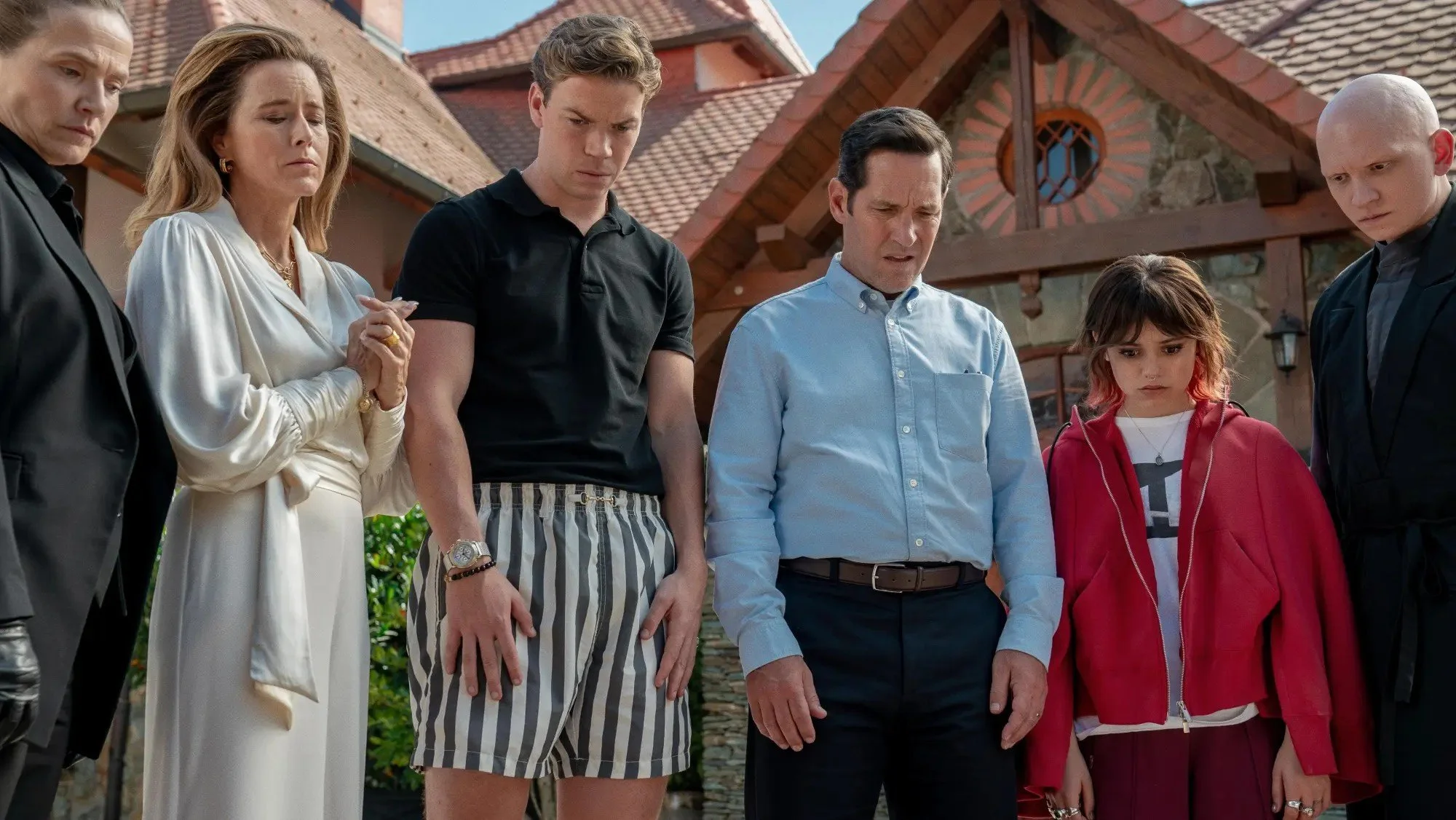
2025 • Alex Scharfman • 107 min • A24 • Horror / Comedy
Death of a Unicorn opens with Ridley Kintner (Jenna Ortega) and her father Elliot (Paul Rudd), en route to a retreat hosted by Elliot’s billionaire employer and his family. Their weekend is framed, initially, as an opportunity to reconnect. It soon becomes apparent, however, that Ridley is little more than a pawn, her presence specifically requested by the enigmatic Leopolds as part of a game Elliot is more than willing to play. This uncomfortable excursion into the wilderness of the Canadian Rockies brings the headstrong activist face-to-face with a unicorn and thrusts her into the orbit of people whose wealth appears to trump even family, despite their repeated proclamations of its importance. It is a neat encapsulation of what Death of a Unicorn wants to interrogate: what happens when the things we claim to value become subordinate to what we can extract from them.
The arrival of the unicorn heralds the farcical logic central to the film’s conceit and, initially, feels as though Scharfman is embracing the promise of his premise. The willingness to treat the impossible as an entirely reasonable intrusion into what is otherwise a recognisable world is where his satire first finds teeth. The characters are curiously slow to recognise the creature they injure and subsequently beat into submission, refusing with increasing absurdity to name that which lies plainly before them. That is, until Ridley does.
“It’s a fucking unicorn.”
The Lodge gives that absurdity somewhere to metastasise. Secluded in the mountains, the Leopolds have constructed a world in which everything possesses both symbolic and transactional value; beauty matters only insofar as it can be owned, rarity insofar as it can be monetised, and even family has mutated into another language through which they amass and negotiate power. Their pastoral refuge permits ambition to unfurl without question or judgement. It is not until Ridley arrives that anybody has either the audacity or the capability to consistently challenge them.
Once the creature’s restorative properties become apparent, the Leopolds move with almost comic efficiency from astonishment to acquisition. Their desire to literally bottle the curative wonder it represents unfolds with malefic immediacy. Wonder lasts only as long as it takes to calculate a return. Their cartoonish approach to reality is to be expected; they are caricatures. Yet the sight of all three reaching immediately for their phones, calling a myriad of contacts and jostling over pricing ahead of the unveiling of their pharmaceutical holy grail is simultaneously amusing and disquieting.
The real terror is not necessarily in the sequences that follow, but here, in one of the film’s quieter moments, contained within the walls of their monolithic fortress. This is where Death of a Unicorn is at its sharpest. The family’s appetite is grotesque precisely because nothing appears capable of satisfying it. They already possess extraordinary wealth, an isolated mountain estate and access to virtually every luxury imaginable, yet abundance has done nothing to diminish their hunger. If anything, it has stripped the world of intrinsic value. Everything must now justify itself through ownership, utility or return.
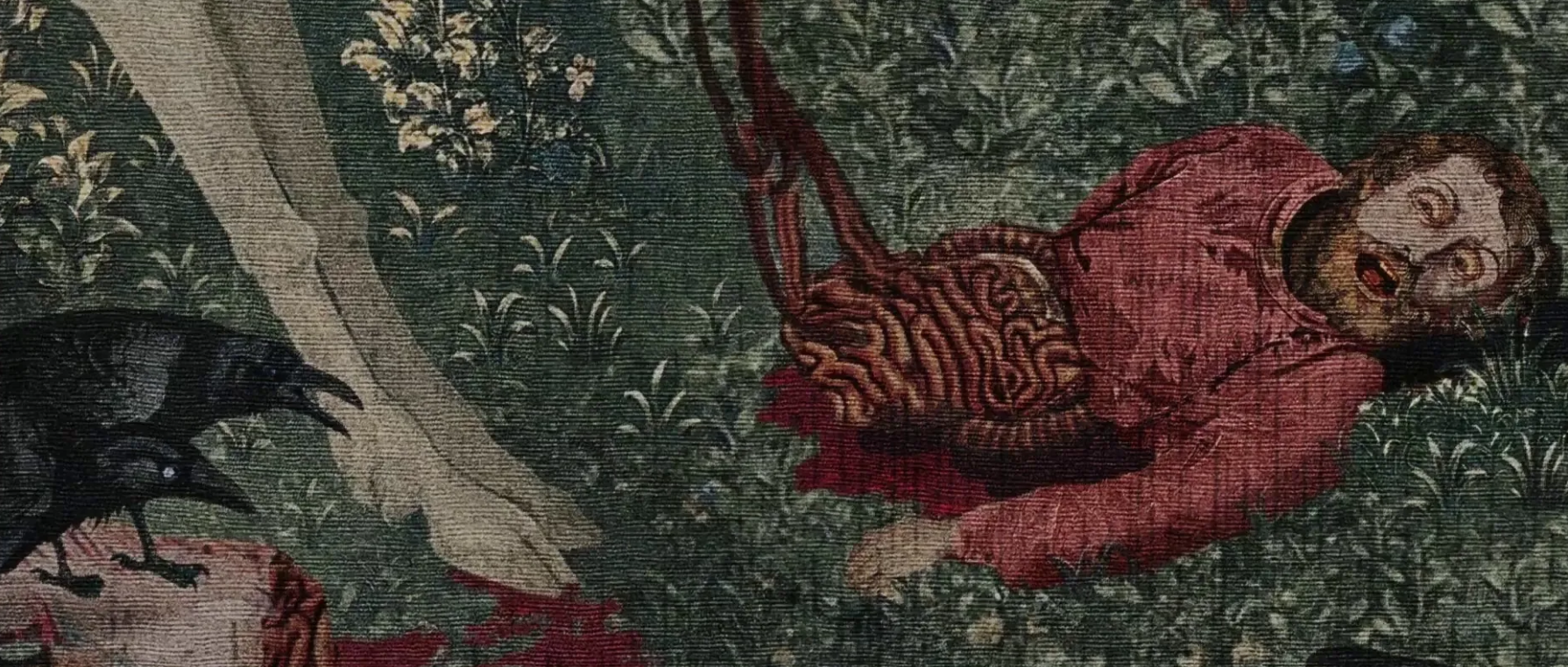
Ridley’s research into unicorn mythology, tenuously linked to the memory of her deceased mother through a visit to the Cloisters, makes increasingly explicit the danger invited by their pursuit of commodification. By now, the film’s thesis is no longer something to decipher or excavate from subtext; Scharfman has placed his intention firmly in the spotlight.
Despite the thinly veiled exposition, delivered more than once by Ridley, who remains the film’s most consistent resistance to the Leopolds’ logic, there is something effective, almost respectable, in Scharfman’s lack of subtlety. They do not encounter the mystical creature at the centre of the film in its prophetic form, but as an opportunity. It is the ultimate symbol of wealth, not because of its majesty, but because its medicinal properties appeal directly to the instinct concealed beneath the gorgeous aesthetics of their surroundings: acquisition. The unicorn is merely a business model in equestrian form, and that becomes the creature’s reality before its blood has even dried.
Death of a Unicorn (2025) • A24
Ortega plays Ridley’s preoccupation with preservation over possession with brilliant indignation and enough abrasion to almost prevent the character from becoming a simple moral mouthpiece. She is angry, frequently exasperated and openly contemptuous of the people around her, but the film gives that anger a material basis. She is surrounded by adults who recognise what is wrong and proceed anyway, apathetic to the potential consequences of their actions.
It is easy to share in Ridley’s frustration. Her father understands enough to recognise the ugliness of the Leopolds’ world, yet fails to curtail his own desire for the material rewards it promises. His failure is not one of ignorance. It is one of accommodation. Whereas the Leopolds are already lost to the world they have constructed, Elliot still possesses the capacity to reject it. There are repeated opportunities for him to draw a line in the quicksand upon which he stands, but he is unable to do so. To sink, clearly, is to succeed.
Elliot’s pursuit of advancement, security and access reflects desires most people can recognise and have, for better or worse, coveted at some point in their lives. It is what makes Rudd’s performance so innately human. Each surrender can be justified internally, dismissed or ignored. Taken separately, every compromise he makes for the Leopold family appears survivable; cumulatively, they reveal a man willing to subordinate almost anything to the possibility of upward mobility. Even the life of his own daughter.
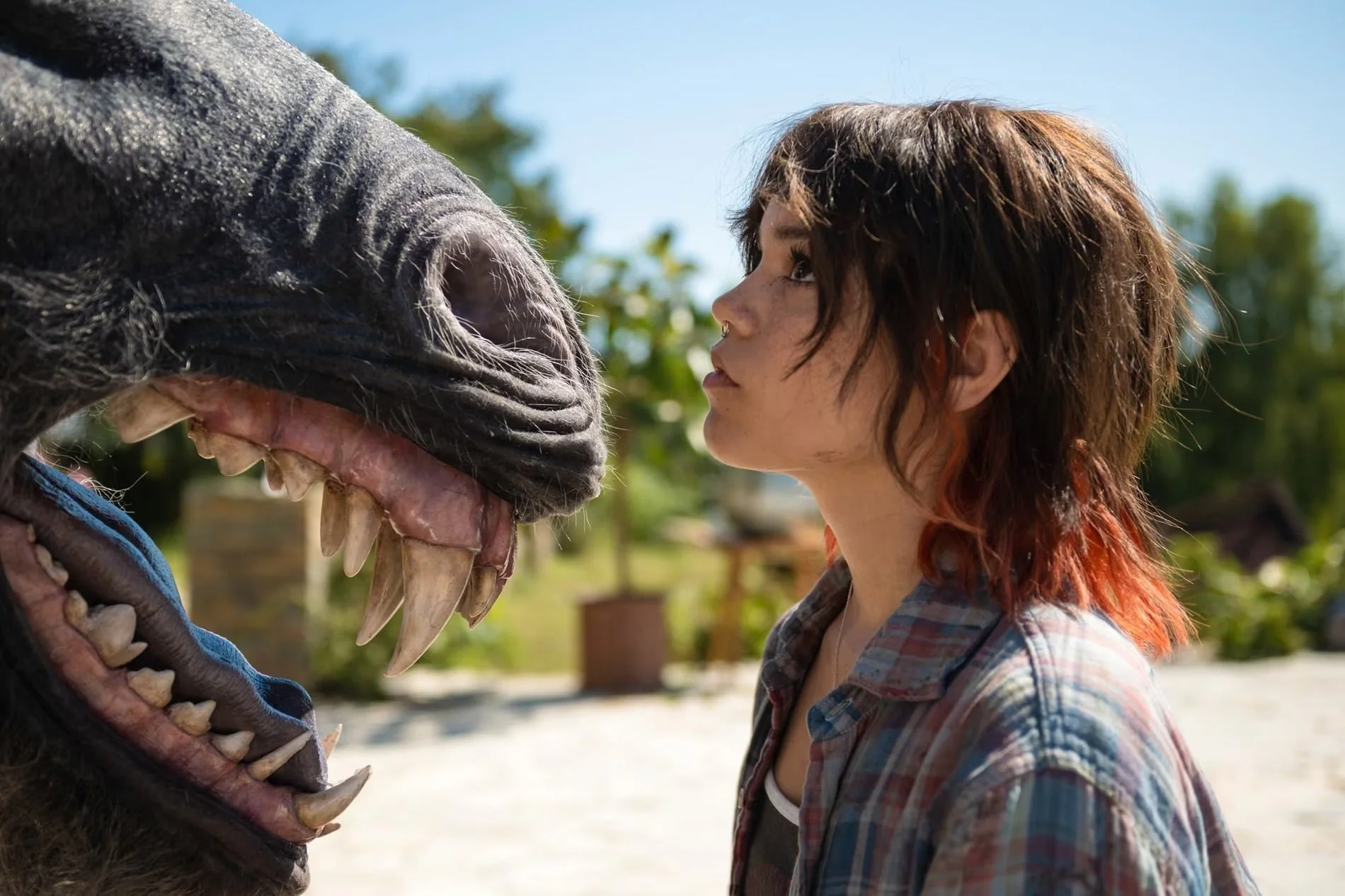
Scharfman’s direction suggests a point of no return. Elliot is faced with a choice. He can side with Ridley, who stands off-centre and darkened by shadow while Odell’s elite hunting party prepares to wage war against the bloodthirsty unicorns, begging him to listen to her for once, or he can choose the promise of a partnership with the richest man he could ever hope to meet.
Once again, he allows capital to dictate his behaviour.
If the film’s moral architecture means anything, that decision should matter.
Death of a Unicorn (2025) • A24
The Leopolds are not being punished because they are unpleasant, nor are they hunted simply because they are obscenely wealthy. They are destroyed because the thing they attempt to convert into property, a living, breathing creature, refuses to play by man’s rules. Their fates complete the film’s metaphor with the bluntness of ivory impalement, entirely appropriate to everything that has preceded it. For a moment, Death of a Unicorn appears ready to make consequence inseparable from extraction.
The two have become so entwined, bastardised by those who eschew the former in pursuit of the latter, that there can be no reprieve.
But the monsters at the heart of the story resurrect Elliot and spare him from the fate the film has worked so hard to establish that he deserves.
The problem is not simply that the ending is sentimental. Sentimentality is hardly a crime. The problem is that Death of a Unicorn has spent considerable effort demonstrating that the machinery of capital depends precisely upon the accommodation Elliot facilitates. His complicity is suddenly treated as qualitatively different from that displayed by the Leopolds. Exploitation does not occur spontaneously; it requires not merely the existence of people powerful enough to exploit, but the willingness of those beneath them to participate in exchange for some semblance of recognition or access.
By sparing Elliot the consequences of that participation, the film compromises its own argument and retroactively softens the moral distinction that forms the spine of its satire. The Leopolds are consumed by greed, yet when Elliot adopts the same logic and makes himself complicit in pursuit of its rewards, he is permitted to emerge with both his family and his life intact.
The film wants the emotional satisfaction of reconciliation without accepting the cost its own thesis demands. Death of a Unicorn understands that capital will attempt to consume anything placed before it, even the majesty of wonder itself. It simply cannot accept that those who willingly feed that appetite must also be prepared to be consumed by it.