
Mother Mary
David Lowery’s Mother Mary is a seductive, formally audacious examination of celebrity and intimacy, in which an artist and her muse must confront the identities they created together and the sacrifices they made in the process.
2026 • David Lowery • 112 min • A24 • Thriller / Drama
Lowery's film opens in isolation. Anne Hathaway's Mother Mary is imprisoned within the confines of a world we imagine she once aspired to inhabit, desperate to get out. The trappings of success appear to have cost her something, or someone, though the nature of that loss is not immediately apparent. The film frames her as an icon, a cause célèbre that generates its own force of gravity. She is adored, idolised, and afforded all the power that comes with her position in the zeitgeist. But in her manufactured divinity, there is contradiction. As she prepares for one of the biggest performances of her career, something is haunting her, a presence that threatens to unsettle the very image upon which that career depends.
Sam Anselm, played with commanding assurance by Michaela Coel, is the woman who once dressed Mary and helped take her from obscurity to the pop powerhouse she has become. Their partnership has long since fractured, but its history permeates every facet of their reunion. When Mary arrives uninvited at Sam's secluded home and workshop, seeking a dress for her impending performance, it is an intrusion as much as a homecoming. In the space Sam has built away from Mary's world, the woman accustomed to being worshipped finds herself walking a tenuous line of welcome.
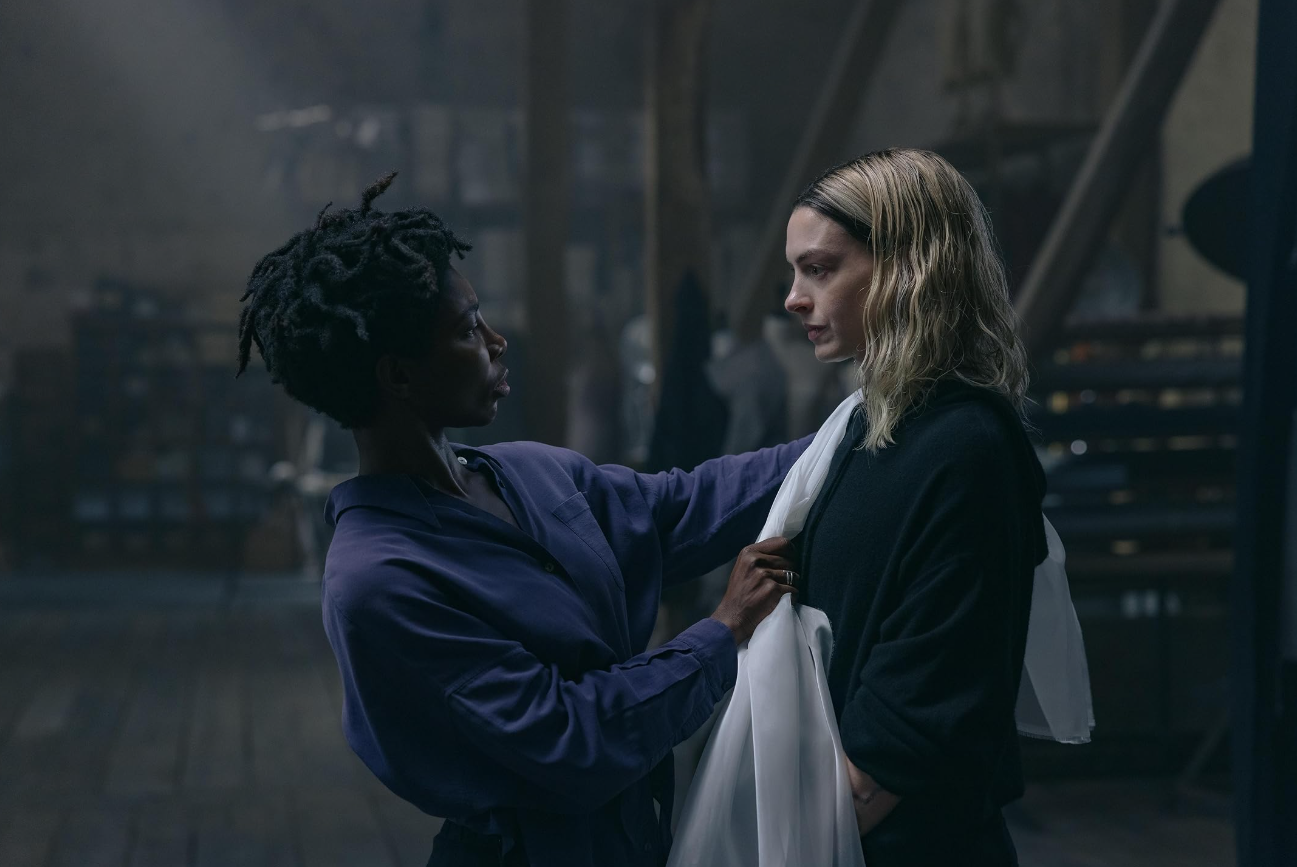
Interestingly, for all of the power and the fame she has accumulated, Mary becomes increasingly meek in Sam's presence. Coel's domineering creative is an electrifying foil to Hathaway's uneasy vulnerability and their exchanges are fraught with a palpable psychosexual tension as they begin to fall back into familiar ground. Sam knows the woman behind the façade and appears largely unmoved by the celebrity the rest of the world idolises, a celebrity that she helped create. As the two women begin to retrace the steps that led them apart, Lowery's camera watches with an almost voyeuristic intimacy.
Mother Mary (2026) • A24
The camera sides with Sam as she entices Mary to perform the choreography to her new song in the silence of the barn. There is curious indignance emanating from within the frame and Sam appears determined to derive some perverse enjoyment from Mary's routine. It is uncomfortable, its movements seemingly lifted from a traumatic, demonic exorcism. While Mary throws herself into it with the commitment that an audience would come to expect from her, Sam watches with a smile. She refuses to hear the song, unwilling to break her abstinence from Mary's music. Stripped of the spectacle that ordinarily accompanies her performances, Mary's choreographed self-flagellation becomes an exposure of vulnerability before the one person who refuses to be impressed.
Their shared history is inseparable from the identities they have constructed. Sam chastises Mary as she flicks through a copy of Vogue, confronting the extent to which her artistry has been absorbed into the mythology of the woman she helped create. Even her words, her thoughts and the lived experiences that ultimately shaped her as an artist have been preserved under Mary's name. The stylist, whose quiet power stood in the shadow of the muse she made, appears to have compromised too much of herself in their joined pursuit of celebrity. But it is Mary whose name is globally recognised: the sacrifices that underpin their relationship have not been equally borne.
They are haunted by the memory of the past.
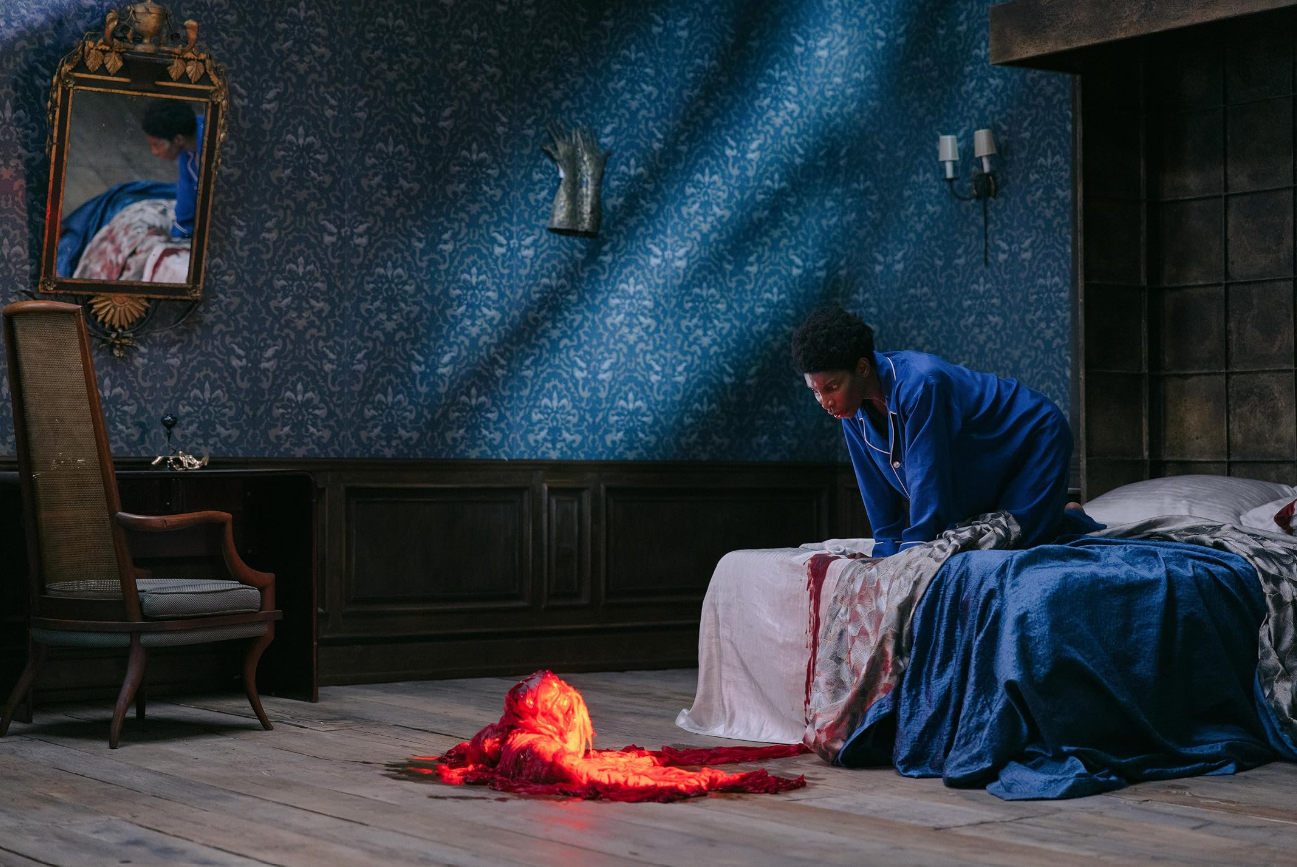
The haunting takes the form of a piece of red fabric, an apparently feminine presence that Sam encountered in the aftermath of their separation. On the night she witnessed Mary perform for the final time, she awoke surrounded in blood and watched as it seemed to curl into the outline of a garment at the foot of her bed, a manifestation of the relationship she had finally brought herself to confront. In this recognition, Sam eschews a connection to it. She opens the door and sets the ghost free, releasing herself from the burden of carrying Mary's memory into her future. Mary, on the other hand, finds no such release. When the garment follows her from the foot of Sam's bed all the way to Dublin, its haunting is more violent, intruding upon her body through bloodshed and wound.
Mother Mary (2026) • A24
The women retrace their divergent lives, standing together as witness to the events that led them to today. Lowery places shadowy figures at the margins of his compositions. They appear to resemble whichever woman occupies the scene, as though the people they once were have become spectators to the lives they have since constructed. The choice to make their own past personhood physically present allows for interrogation into the nature of what sustains our relationships and how the sacrifices and compromises we make can intrude upon the very space in which we attempt to understand them.
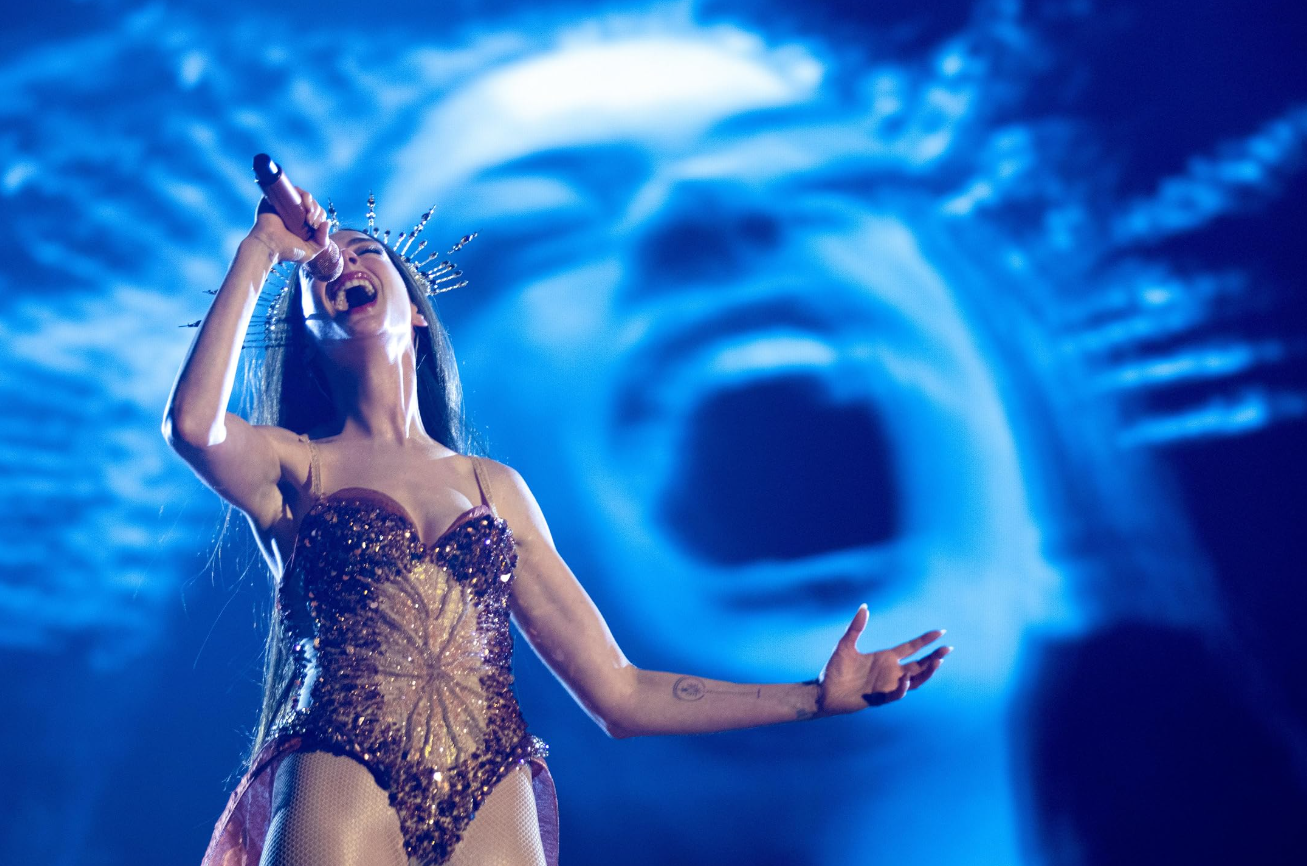
For Mary, however, the person she used to be still occupies the space of who she is today; Sam's contribution to her constructed identity was so formative and intrinsic to her own mythology that she cannot separate the two versions of herself. As the film transitions from the intimate space of Sam's barn to the clamouring interior of a stadium, where Mary steps into the lights to perform Holy Spirit, Lowery permits us to witness Mother Mary in all her glory, and the enormity of the spectacle is difficult to resist. Its theatrical bombast recalls the scale and extravagance of Taylor Swift's Reputation tour, but Lowery's command of movement, music and transitional framing gives the performance an almost overwhelming immediacy. The sequence is incredibly seductive. So much so that, for a moment, the distance between watching a concert and attending one seems to collapse. Hathaway inhabits the fantasy without inhibition, and the film becomes every bit as enthralled by its icon as the audience gathered before her.
Sam understands this spectacle but, more importantly, she understands the cost of designing it. She had spent decades ensuring that Mary was appropriately armoured for the barbarous exhaustion that accompanies live performance and now, on the eve of arguably her most important show, that responsibility falls to her once more. With the deadline looming, she remeasures Mary and, in doing so, their history. Lowery's camera remains still through a succession of intimate close-ups, abandoning the freneticism of the concert sequence, as Sam snakes the measuring tape across Mary's body, thus allowing us to become privy to something intensely private. Their conversation wanders through the past, revisiting a history whose significance has shifted in the years since their separation. Sam inscribes measurements directly onto Mary's skin, marking her in a manner almost ritualistic. It is as though the numbers have become runes that invoke the supernatural forces that have drawn them together. Tenderness simmers beneath the words they exchange, as sexuality does in their proximity. Sam adjusts Mary's hair, revealing more skin beneath her garments and moves across her body with a familiarity that exceeds the practical demands of her work. The camera permits us to witness this intimacy without interruption, and the chemistry between Coel and Hathaway is scintillating. Here, the act of creation becomes an expression of both trust and possession; Sam is exercising an authority over the woman whose image she helped construct, and Mary willingly surrenders herself to the hands that fashioned it.
This surrender continues at Sam's declaration that they must free Mary from the spirit that haunts her. She explains that they must do so together; everything they have achieved up until now has been borne out of a creative and intimate partnership from which they may or may not eventually hope to be freed. Mary is sceptical. She believes that the weight of that which she carries is her burden alone to manage, but Sam refuses that assessment: the weight is theirs. They have shared that same burden and carried it at different points. Sam may now be free of that ghost, but that doesn't mean she should refuse Mary that same emancipation. Yet as their shared reckoning assumes the form of an exorcism, Lowery's command of the material becomes less assured. The supernatural, which had so effectively made their history tangible, begins to overwhelm the intimacy that originally gave it meaning. The dialogue retreats further into metaphor, increasingly preoccupied with the nature of the haunting rather than the relationship it was designed to embody. The result is, unfortunately, an uneasy route toward the film's climax; the very imagery that once illuminated these women has begun to threaten them with obscurity.
Mother Mary (2026) • A24
Yet even as its supernatural excess threatens to overwhelm the relationship at its centre, Lowery's increasingly visceral treatment of that intimacy poses an unsettling question: how far are we willing to go in pursuit of the relationships that made us who we are? Both characters have managed to re-tread the ground of a relationship so familiar to them that they're willing to bleed for one another. Mary goes so far as to take a pair of scissors and literally open her chest, baring her heart to Sam.
Exorcising the ghost is not synonymous with the exorcism of the past. They may be free of its weight, but the history it embodies remains. In the back of a car, preparing to depart for Sunday's performance, Mary apologises to Sam. There is sincerity in her repeated, tearful admissions, but the revelation is incomplete. Mary recognises that she has hurt Sam, though the true weight of that hurt, and the sacrifices Sam made to enable her ascent, may remain beyond her understanding. There is no grand reconciliation, nor any return to the women they were before.
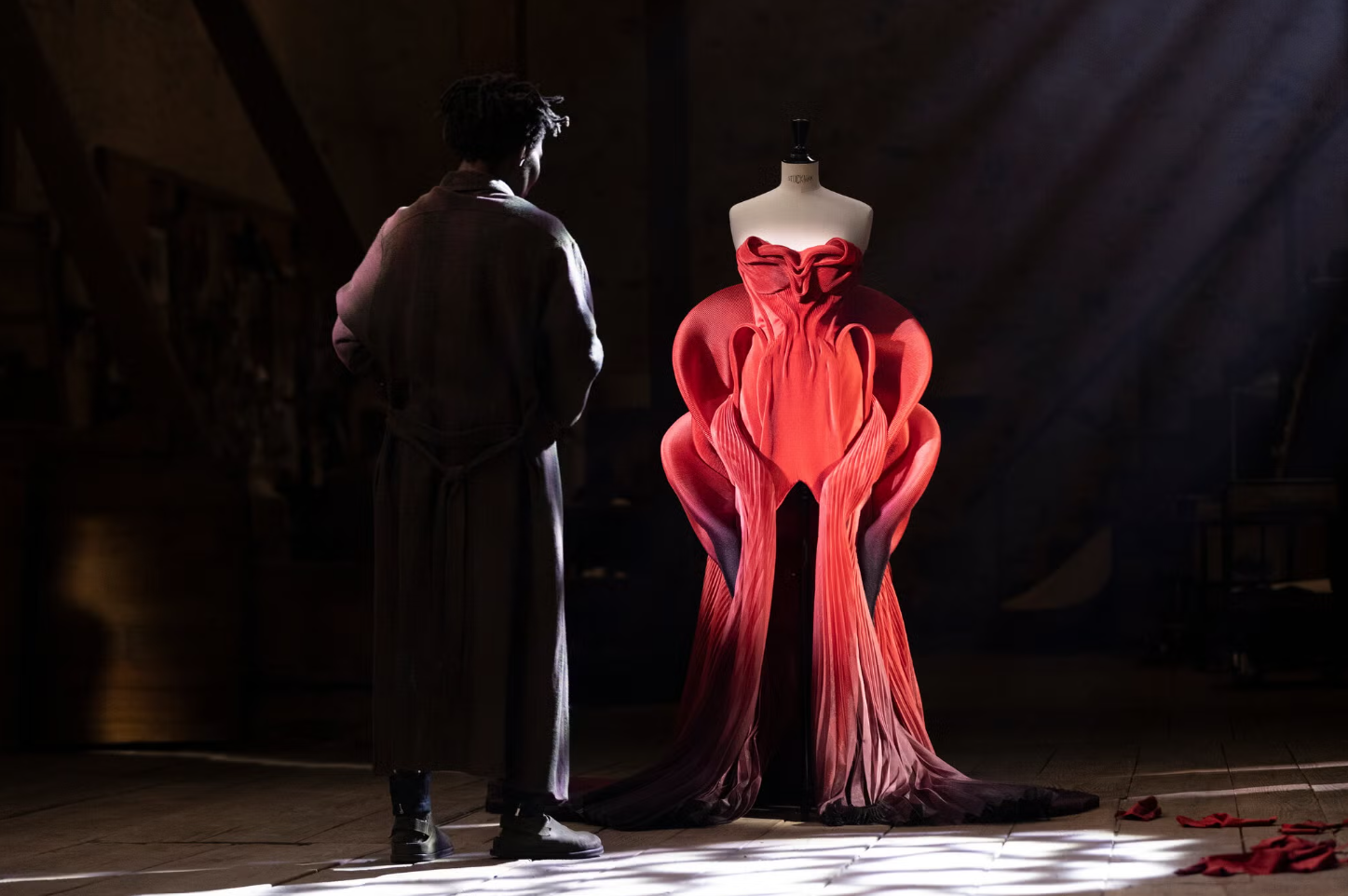
Instead, Lowery leaves us with the dress. The final image is a testament to the creative intimacy that has sustained these women, even as their relationship has threatened to destroy them. The garment is complete, a final act of collaboration between two people who have come to recognise the impossibility of restoring what they once shared. It is the material expression of a relationship that has shaped them both, a creation borne of compromise and sacrifice. What they created together survives in Mother Mary, but what they surrendered to create her cannot be returned.